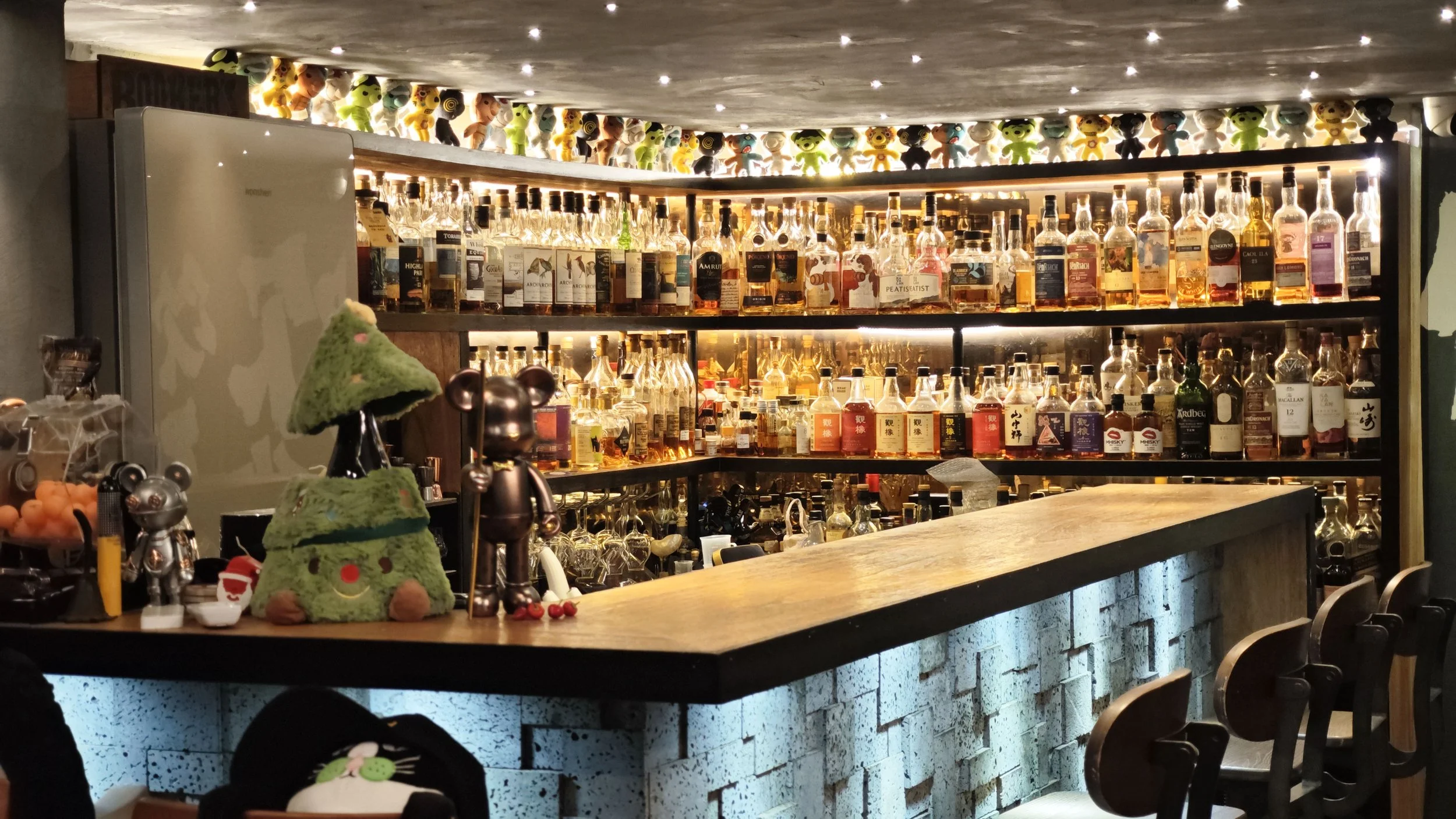
Gene and the Kind of Truth He Refuses to Trade Away
What he offers is not noise, and not just whisky, but a way of living that still trusts instinct, experience, and taste.
In today’s whisky world, attention is never in short supply. New releases arrive constantly. Packaging grows more elaborate. Limited editions, collaborations, and carefully constructed stories layer onto a landscape that often feels crowded before a bottle is even opened. Flavour is still discusse d, but so are status, rarity, and perception.
That is precisely why people like Gene feel increasingly rare.
Based in Southern China, Gene is both a bar owner and a long-time insider in the regional whisky scene. He is also the founder of Whisjockey, a large-scale whisky festival in Guangzhou that brings together producers, independent bottlers, and drinkers from across the region. His work naturally places him at the centre of attention—yet attention has never been his focus.
He is less interested in noise than in selection, less persuaded by momentum than by his own sense of what is worth keeping. For him, whisky is first something to be drunk. Only after that does it become something to be discussed, shared, or slowly understood.
Which is perhaps why, when looking at Gene, the more interesting question is not what he does, but how—how, in an increasingly noisy age, he has managed to hold onto something quietly uncommon: a sense of proportion, and a way of judging that still belongs to himself.
1. If we trace it back far enough, where did Gene’s relationship with whisky really begin, and what was it that first drew him in?
Looking back, Gene’s connection with whisky did not begin with a grand turning point. It emerged more gradually than that, almost as an interest that surfaced inside an otherwise ordinary life. He began drinking during his university years, without any real plan or sense of direction. Like many people, he started with beer. Alcohol at that stage was simply part of social life, something encountered casually and without much thought beyond the occasion itself.
That changed when he had whisky for the first time. The bottle was Jack Daniel’s. It was not especially complex, nor was it the sort of dram that people tend to romanticise in hindsight. But against the backdrop of beer, it felt immediately different. The flavour was denser, more concentrated, more clearly defined. It did not disappear into the background in the same way. It asked to be noticed. For him, that difference mattered. It revealed that alcohol could carry a kind of personality, that a drink could be more than just a drink.
That first recognition stayed with him.
Later, when he moved into single malt, the experience became something else entirely. It was no longer just about trying a different category. It became a matter of noticing variation—between distilleries, between vintages, between styles and structures of flavour. What began as curiosity started to deepen into attention. He was not pursuing a formal destination, and he did not seem to decide in advance that whisky would become central to his life. But the more he drank, the more specific his interest became, and the less easy it was to leave it at the level of passing enthusiasm.
Many people keep drink at the edge of life. They enjoy it, perhaps learn a little, and stop there. Gene moved in the opposite direction. The more he encountered, the more he wanted to understand. Why did certain flavours emerge the way they did? What shaped them? Why did one whisky feel coherent while another did not? Why did some styles linger in the mind while others vanished after the glass was empty? Over time, this accumulation of questions made it harder to describe whisky as a hobby in any casual sense.
Eventually, it became his work. But to describe that shift merely as a response to market opportunity would miss the real shape of the journey. What happened was not that he chose an industry and then looked for a place inside it. It was that his interest, his taste, and his way of paying attention gradually converged. By the time whisky became a profession, he had already been moving toward it for some time.
Seen from the outside, the path can look understated. There is no dramatic reinvention, no single moment that demands to be mythologised. It is simply the story of someone who kept following a particular kind of fascination, and in doing so allowed his life to lean further and further in its direction.
That is part of what makes Gene distinct. He did not begin by wanting to build a whisky business. He began by being persuaded—slowly, repeatedly—by something in whisky itself. What drew him in was not prestige, and not even expertise at first, but the unmistakable sense that this was a world with character in it, and that character was worth staying close to.
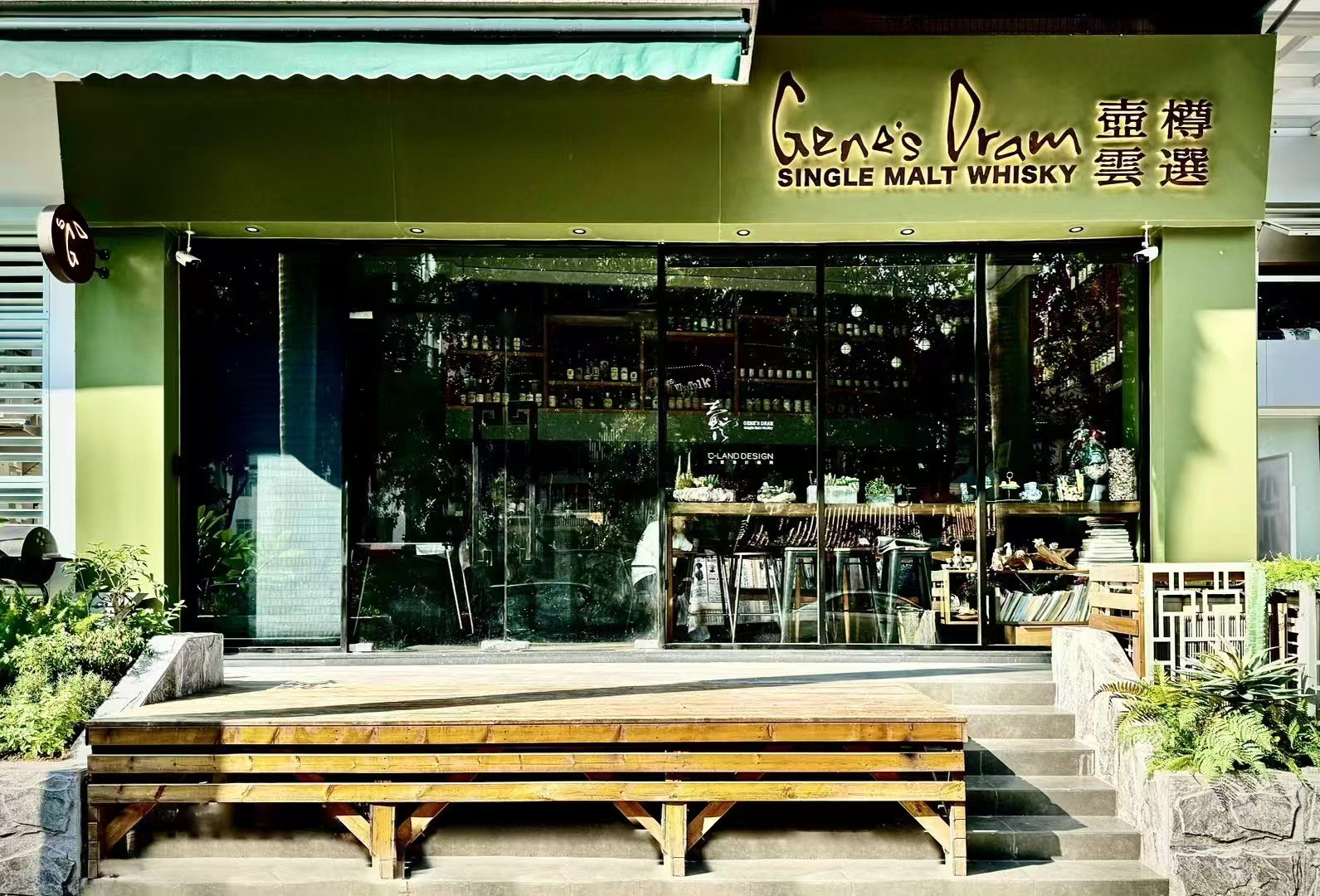
2. When a space that began as a private place for sharing bottles slowly opened into a real bar, what was Gene most determined to preserve?
On the surface, Gene now runs a whisky bar. But that description only tells part of the story. If you look one step earlier, the origin of the space becomes much clearer: it was never conceived as a bar in the conventional sense.
At the beginning, it functioned more like a studio or private room, a place where Gene could share bottles in person during his free time. Its purpose was not to receive customers in the structured way a hospitality business does, nor was it built around a formal service model. There was little sense of commercial planning behind it. It was, more than anything else, a personal extension of his world—a place that happened to make room for conversation, taste, and the simple act of opening a bottle with others.
Only later did it become more publicly accessible. Only later did it become what people would straightforwardly call a bar. Yet even that transition did not seem to come from ambition in the ordinary business sense. He was not trying to scale a concept, and he was not entering the trade because he wanted to build a new operating model. His reason was simpler than that: he wanted more people to be able to come by and drink.
Because of that, the space still carries the logic of its beginning.
The bottle selection is not built around trend forecasting or broad market coverage. It begins with his own judgment. He does not first ask what the market wants and then decide what to stock. He starts with what he personally believes in, what he finds worth pouring, what he is willing to stand behind. That may sound straightforward, but it creates a particular kind of boundary. Certain things will never appear there. Others will keep returning. The curation is selective not because it is designed to exclude, but because it comes from a person rather than a formula.
The same principle shapes the overall identity of the place. Gene’s Dram is not trying to be everything at once. Whisky is clearly the centre of gravity. Cocktails exist, but in a supporting role. That choice matters because it tells people, quietly but firmly, that this is not a venue trying to cover every possible desire. It is trying to do one thing clearly.
In that sense, the space does not strive for completeness. It is closer to a statement with edges. It does not chase every demand, and it does not try to prove its value by expanding indefinitely. It decides what it is first, then opens outward from there.
Perhaps that is why it does not feel like a bar that has been manufactured from scratch for public consumption. It feels more like an already existing world that has been partially opened. When someone walks in, they are not entering a place designed to anticipate and absorb every kind of expectation. They are stepping into a space that already has its own rhythm, its own standards, its own internal logic. They may take part in it, or they may not. But the place does not change its direction simply because someone has arrived.
That, more than any aesthetic detail or service concept, seems to be what Gene wanted to preserve.
Not a style. Not a script. Not a standardised version of hospitality. What he preserved was the order of things: this space belongs first to his judgment, and only then does it become a place other people can enter.
When that order remains intact, people often leave with a feeling they cannot fully explain. They may not articulate it immediately, but they recognise it afterwards. The place is memorable not because it is the loudest or the most comprehensive. It stays with them because it feels real, and because it still knows how to withhold something.
3. In Gene’s world, when he talks about sharing good whisky, is it really only the whisky he is sharing?
Taken literally, “sharing good whisky” sounds simple enough. You choose good bottles, pour them into glasses, and let other people experience them. But in Gene’s case, the act of sharing clearly extends beyond the liquid itself.
He describes the culture of his space with three words: independence, freedom, and purity. They are uncomplicated words, but together they shape the entire atmosphere of how whisky is encountered there. This is not a place built around definitive answers, nor is it a place where knowledge functions primarily as a hierarchy. What matters more is whether a person still has enough room, when faced with a glass, to feel something directly and judge it for themselves rather than rushing to confirm whether their reaction is “correct.”
That also explains his attitude toward newcomers. He is not hostile to structure. He is perfectly willing to prepare accessible bottles and let people begin with the basics. He understands that most whisky journeys do move from familiar styles toward more unusual ones, from lower strength toward higher strength, from simpler to more expensive. But beyond that path, he keeps returning to one principle: do not give away your own instinct too quickly.
When he says people should not simply follow the crowd, it does not come across as rebellion for its own sake. It sounds more like a precise and practical warning. Before you borrow someone else’s conclusion, first confirm what you actually taste. Before you inherit the language around a whisky, notice your own experience of it. In that sense, his way of sharing is not about transmitting authority from one person to another. It is about creating the conditions in which someone else might begin to trust their own palate.
That changes the nature of “education.” It stops being one-way instruction. It becomes a slower, more open process in which different responses are not only allowed but expected. Some people will be drawn to certain styles immediately. Others will dislike something at first and understand it later. Some will revise their tastes over time. None of that needs to be forced into agreement.
Gene clearly has his own preferences. He clearly has his own standards. But he does not seem especially interested in producing copies of his own judgment. What he wants is not for everyone to like what he likes. What matters more is whether people begin to develop a way of understanding flavour that genuinely belongs to them.
That is where his phrase, “Drink less, drink better,” starts to carry more weight than it first appears to. On one level, it is a philosophy of consumption: moderation, discernment, quality over quantity. But it also gestures toward something broader. It suggests that taste is not merely about accumulation. It is about attention. It is about choosing where to stop, where to linger, what deserves your time, and what does not.
Once you see it that way, whisky becomes a remarkably gentle medium for something larger. People arrive for the bottle, but what they may actually be recovering is a way of relating to experience that is less borrowed, less performed, less outsourced.
That is why what Gene is sharing is not merely whisky.
He is sharing a space in which taste can become personal again. A space in which judgment does not have to begin with consensus. A space in which a person might quietly rediscover the ability to say something very simple and very difficult:
This is what I think.
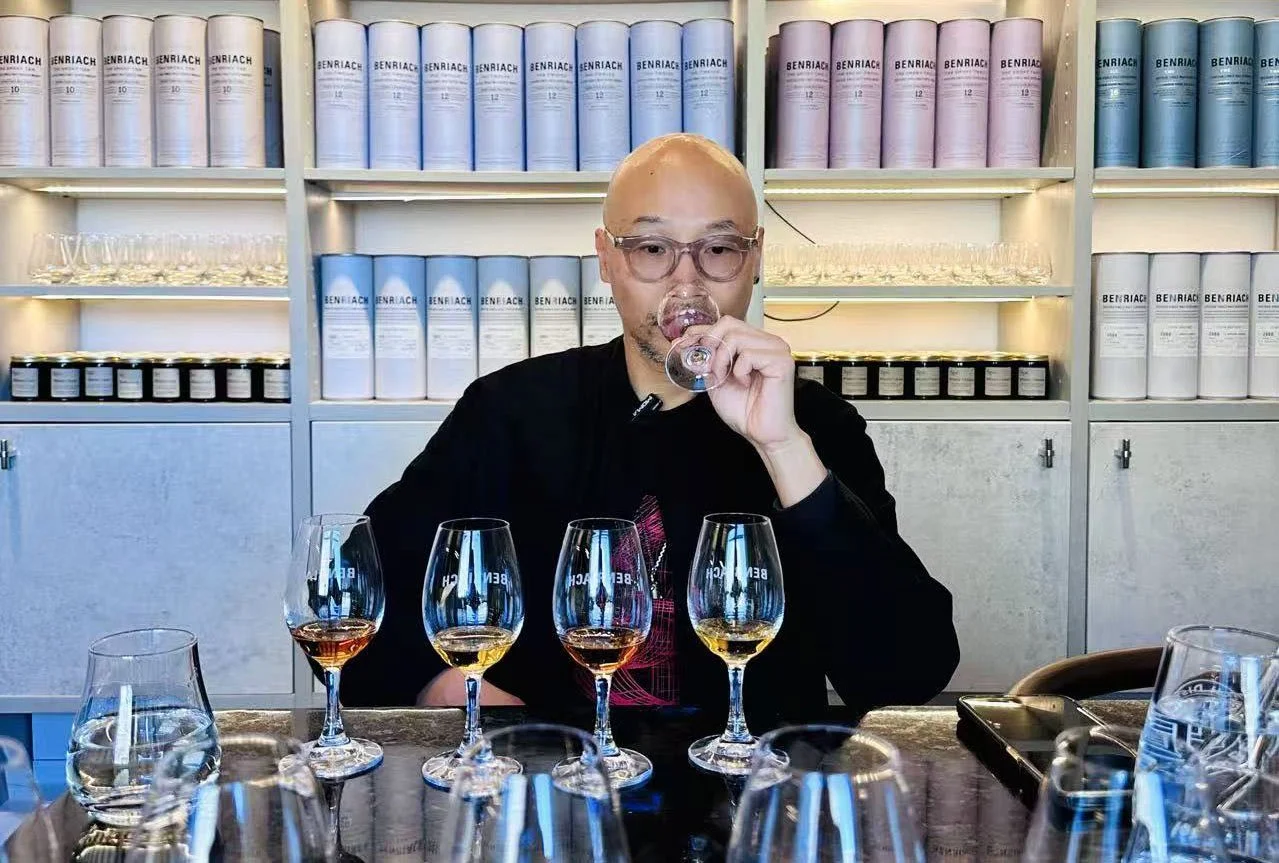
4. As the market grows louder, presentation grows heavier, and the industry moves through hype and correction, what kind of judgment is Gene trying to protect?
Over the past decade or more, whisky in China has gone through a dramatic transformation. It moved from a niche enthusiasm into broader public visibility, then into a period of intense growth in which prices, attention, and cultural prestige all rose together. More recently, the pace has slowed. The market has entered a period of adjustment. Some of the excess has receded. Certain inflated signals have begun to settle back toward something closer to reality.
Gene does not deny any of this, nor does he seem interested in taking a simple moral position against it. In his view, younger audiences and stronger commercial presentation are not abnormalities. They are the predictable consequence of growth. New consumers arrive with different habits of attention. Brands respond with packaging, story, and positioning that can be more quickly understood. None of that surprises him, and none of it can be dismissed out of hand.
What he does notice, however, is the point at which emphasis begins to shift. When packaging becomes increasingly central, there is a danger that people start remembering the frame before they remember the whisky. Labels, stories, concept, rarity, identity—these become the primary object of judgment, while the liquid itself moves further into the background. Bit by bit, attention is transferred from experience to information.
Gene is not anti-commercial. He is not pretending these structures do not exist, and he does not romanticise a world untouched by branding. What concerns him is subtler than that. His question is whether, amid all of these increasingly powerful external signals, there is still enough space left for direct experience. Can someone still sit with a glass quietly enough to encounter the whisky before the narrative takes over?
That same disposition appears in the way he talks about industry practices such as secret distilleries and anonymous labels. He does not reduce them to simple outrage or approval. Instead, he sees them as part of the complex set of agreements between distilleries and independent bottlers. From a drinker’s point of view, he would clearly prefer greater transparency. But he also understands that the industry does not run on ideal conditions alone.
This is part of what makes his position feel mature. He neither surrenders to industry logic without resistance nor rejects it from a posture of purity. He seems more interested in standing somewhere that can remain stable between realism and principle. He understands why certain structures exist, but he still wants to preserve a place from which whisky can be judged as whisky.
That may be why he appears relatively steady even when the market moves through cycles of excitement and correction. He does not need to chase every new wave, and he does not need to define himself through opposition either. He simply keeps returning to the parts he feels able to judge clearly: whether a whisky’s flavour is natural, whether its structure is complete, whether it is genuinely worth sharing.
In a noisy environment, that kind of approach can seem slow. But slowness has its own strength. It is harder to sweep away.
Many people understand “premiumisation” or “consumer upgrading” as access to more expensive bottles, more prestigious categories, more exclusive knowledge. Gene seems to suggest something else. The real question is not how much special whisky you can reach. It is whether, while surrounded by an ever-growing amount of noise, you can still keep hold of the part of judgment that belongs to you.
In other words, can you still stop before accepting the dominant story? Can you still begin with the glass itself?
If that remains possible, then whatever else changes in the market, something essential has not yet been lost.
5. If Gene’s Dram is a journey that is only just beginning, what does he actually hope people will carry away from it?
From the outside, a bar can be measured in many ways. People talk about business, scale, growth, reputation, positioning. They want to know where a place stands, what category it belongs to, how much influence it has accumulated. But when Gene speaks about what the bar has given him, his emphasis falls elsewhere.
He speaks first about people.
Some guests return because they trust his bottle selections. Others come back because they value the way he shares whisky. These may sound like modest forms of feedback, but to him they carry real weight. They do not need to be inflated into achievements. They matter because, in the texture of ordinary days, they confirm that what he is doing is genuinely reaching someone.
Just as important are the people he has met through the space. Through whisky, he has encountered individuals who otherwise would never have crossed his path. Some only pass through briefly. Others return often enough to become familiar. None of these relationships seem to be heavily managed or strategically cultivated. They simply emerge as part of the life of the place, and in doing so they become one of its most natural forms of value.
That is why, when he talks about what the bar has brought him, he does not focus on outcomes in the abstract. What matters is the process itself: continuing to share the whisky he believes in, and continuing to meet interesting people through that act of sharing. Those two things alone already seem sufficient to give the journey meaning.
The same quiet quality appears in the way he describes where he is now. When he says that this is only the beginning, the phrase does not sound like ambition in its loudest form. It is not a declaration of conquest or a promise of scale. It feels gentler than that. It sounds more like someone acknowledging that the road is still open, and that he is still willing to keep walking it. There is no urgency to define the destination too early, and no need to force the story into a grander shape than it naturally has.
Perhaps that is also why his answer to the question of how he wants the bar to be remembered feels so restrained. He does not reach for a grand identity statement. He does not try to compress the place into a slogan. What he hopes people will say is simple: I want to come back.
That is not an ordinary compliment. It says more than it seems to. It suggests that the experience feels easy to re-enter, that the atmosphere is not burdened by too much performance or too much self-consciousness. It suggests that people are not returning only for a single rare bottle, but for the rhythm of the place, the quality of the conversation, and the subtle confidence of its curation. They come back not merely because the bar offers something, but because it offers it in a way that feels human.
As those impressions accumulate, the place begins to form a kind of presence that does not need to be over-explained. It may not be the loudest room in the city, and it may not aspire to become a symbol of anything larger. But in the memory of certain people, it becomes a place one can keep returning to.
And Gene himself never seems eager to enlarge the meaning of that beyond what it already is. He does not insist that his choices are exceptional. He does not package his path as a lesson for others. He simply continues sharing what he loves, in the way he has found he can sustain.
Perhaps that is what makes it believable. Some places are memorable not because they are spectacular, but because someone inside them is quietly, steadily doing the thing they genuinely mean to keep doing.
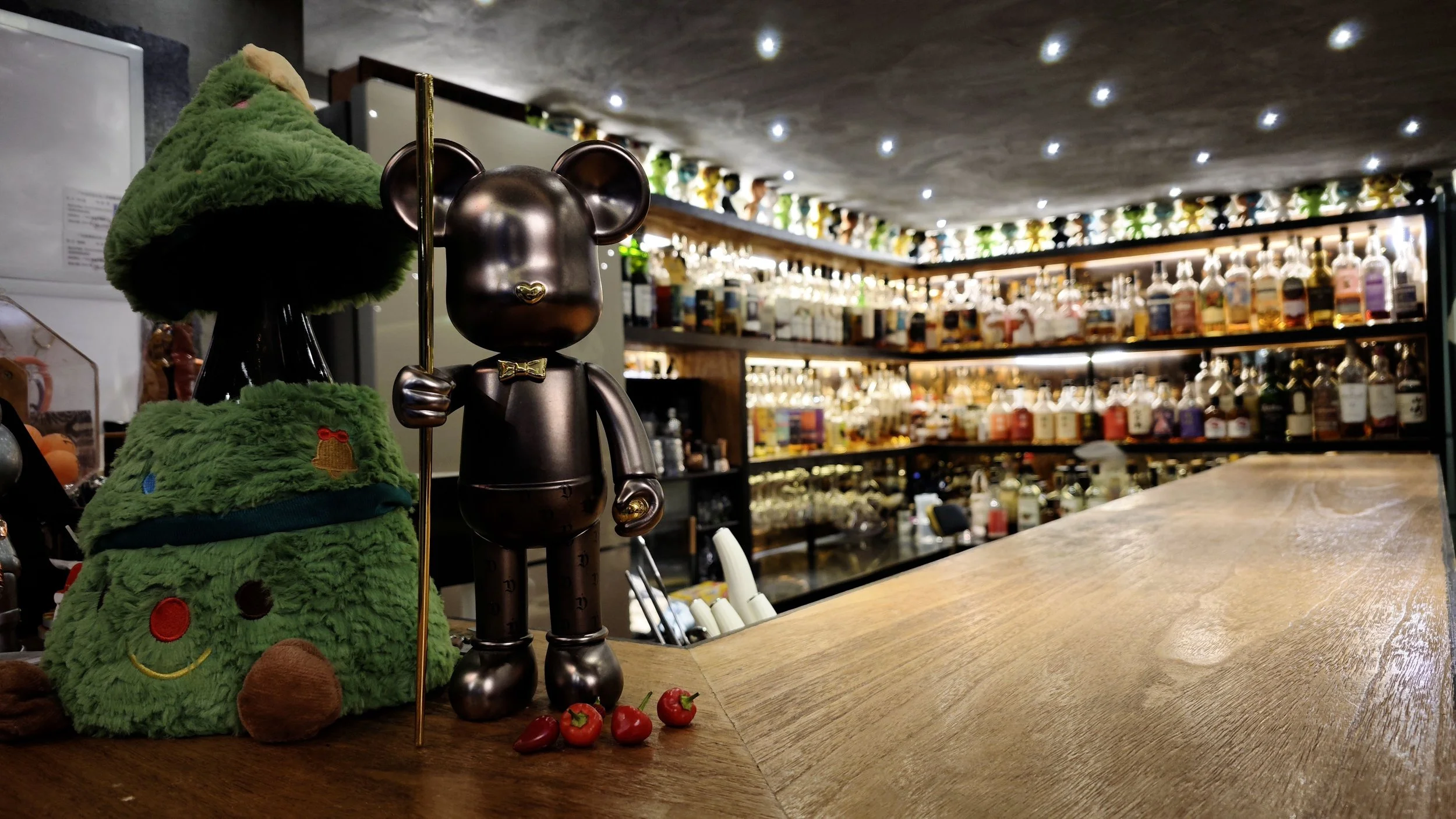
End Note
It is not especially easy to reduce Gene to a clear label, and perhaps that is part of the point.
He does not feel like someone who needs to be fully explained, nor does he seem interested in turning his path into a model others are meant to follow. He has simply continued in the direction of his own interest, keeping the bottles he believes in, placing the things that matter to him into the space, and allowing the rest to unfold at its own pace.
In that kind of setting, many of the things that are usually amplified begin to soften. Whisky no longer needs to be over-interpreted. Experience no longer needs to function as a gatekeeping tool. People do not have to arrive already prepared. They can simply sit down, have a dram, exchange a few words, or spend a while in quiet.
Not everything that matters leaves a strong or dramatic impression. Some things remain in the mind more lightly than that. Not as a particular bottle, and not as a sharply stated idea, but as a mood that turns out to be more difficult to replace than one first realised. A sense that there was not much to prove there. A sense that not everything needed to be explained before it could be enjoyed.
People do not always recognise that kind of feeling immediately.
Sometimes it returns later, in a quieter moment.
And when it does, it often takes a very simple form:
Maybe I’ll go back.